Kaizen 2.0: Using Machine Learning to Accelerate Process Refinement
By Glassdome Admin
In the world of manufacturing, Kaizen – the Japanese philosophy of continuous improvement – has long been the bedrock of operational excellence. It’s about small, incremental changes on the shop floor that add up to big gains in efficiency, quality, and waste reduction. But in today’s fast-paced, data-rich environment, traditional Kaizen needs an upgrade. Enter Kaizen 2.0: harnessing machine learning (ML) to supercharge process refinement, especially for small to medium manufacturers (SMMs) who often lack the resources of industry giants.
The Foundation: Primary Process Data
At its core, Kaizen 2.0 relies on primary process data – the raw, real-time information streaming directly from machines, sensors, and production lines. Unlike secondary data from reports or manual logs, primary data captures the unfiltered pulse of operations: cycle times, downtime events, energy usage, and defect rates. For SMMs, this data is gold, but extracting value manually is like panning for nuggets in a river – time-consuming and imprecise. ML changes the game by automating analysis, spotting patterns humans might miss, and predicting issues before they escalate.
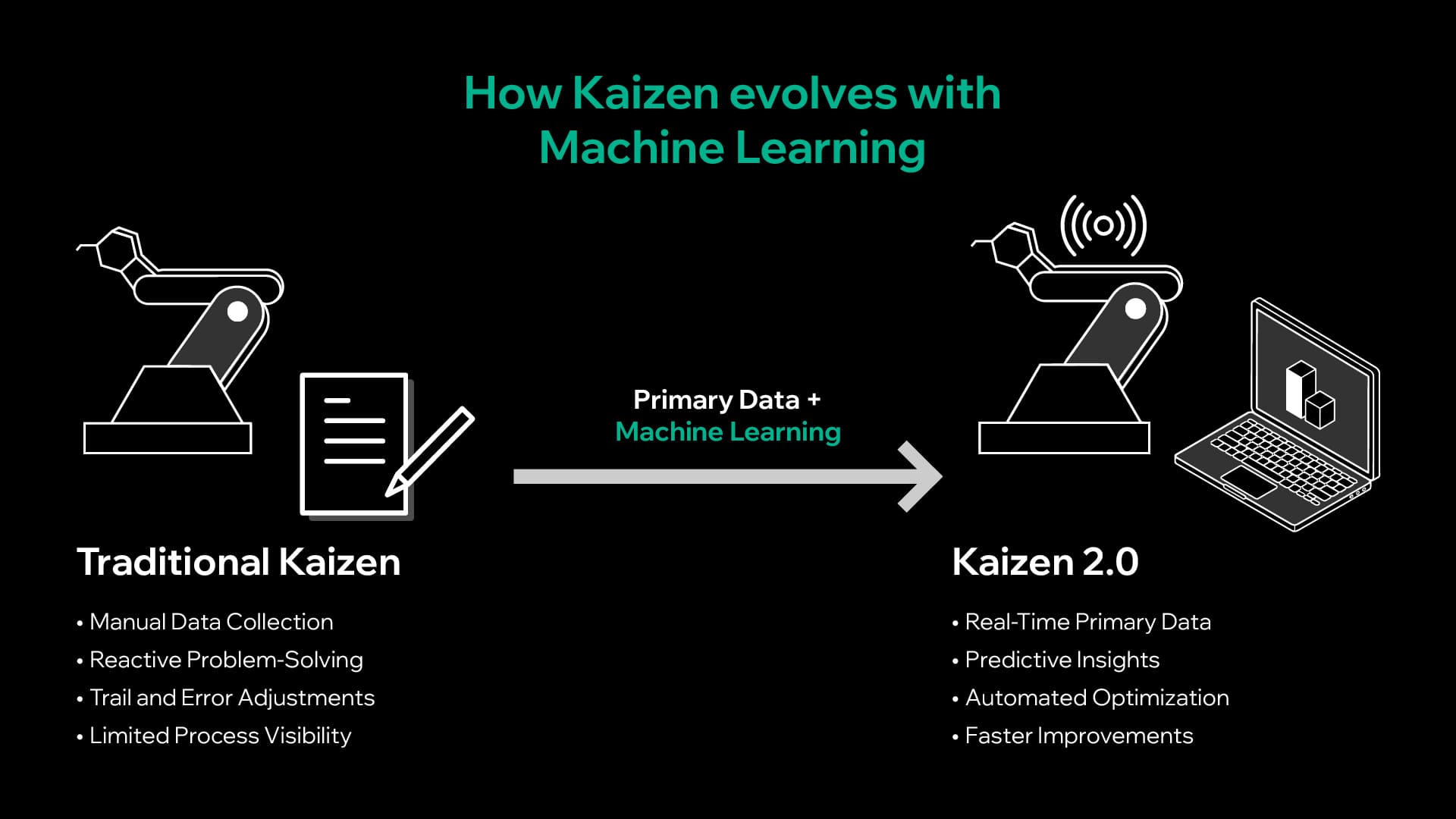
Figure 1: Comparison of traditional Kaizen and data-driven Kaizen 2.0, showing the shift from manual processes to real-time primary data and machine learning for faster and more efficient improvements in manufacturing
Machine Learning in Action
Imagine a mid-sized auto parts manufacturer struggling with inconsistent weld quality. Traditional Kaizen might involve team huddles and trial-and-error tweaks. With ML, algorithms trained on primary data from welding machines can identify subtle variables – like temperature fluctuations or material variances – that correlate with defects. The system then suggests optimized parameters, reducing scrap by 20-30% in weeks, not months. This isn’t sci-fi; it’s actionable intelligence driving shop floor improvements without needing a data science PhD.
Glassdome’s Platform for SMMs
Here at Glassdome, we’re pioneering this shift. Our industrial software platform collects primary process data via simple IoT hardware and wireless connectivity, transforming it into insights through ML-driven analytics. Founded by manufacturing experts, who saw the gap in data utilization for sustainable production, Glassdome empowers SMMs to achieve real-time visibility across the factory. Whether it’s optimizing battery production for EU compliance or cutting carbon footprints in automotive supply chains, our tools make Kaizen 2.0 accessible.
Transformative Benefits for SMMs
For SMMs, the benefits are transformative. Limited budgets mean no room for waste, and ML democratizes advanced tech: no massive IT overhauls required. Start with plug-and-play sensors on key equipment, feed data into our platform, and watch ML uncover inefficiencies. One client, a medium-sized electronics fabricator, used our system to refine assembly processes, boosting throughput by 15% while slashing energy use – directly impacting the bottom line and sustainability goals.
Building a Data-Driven Culture
Kaizen 2.0 also fosters a culture of data-driven decision-making. Shop floor teams get intuitive dashboards highlighting ML recommendations, turning operators into proactive improvers rather than reactive fixers. In volatile markets, this agility is crucial; SMMs can respond to supply chain disruptions or regulatory changes faster than ever..
Quality Data and Implementation
Of course, success hinges on quality data. Glassdome ensures seamless integration, handling everything from data acquisition to ML model deployment. We’re not just software providers – we’re partners in building abundant, sustainable futures.
In summary, Kaizen 2.0 elevates continuous improvement from art to science, powered by ML and primary process data. For SMMs, it’s a leveler, unlocking efficiencies that rival larger competitors. If you’re ready to accelerate your shop floor refinements, explore Glassdome’s solutions today. The future of manufacturing isn’t about working harder – it’s about working smarter.
Getting Started with Data-Driven 4M
Implementing this starts simple: Audit your current data sources, pilot sensors on one line, and map findings to the 4Ms. Over time, it fosters a culture of continuous improvement, making your operations resilient amid supply chain volatility.
Ready to level up? Subscribe to our Sustainable Manufacturing Blog for more insights, or contact us to explore how Glassdome can digitize your shop floor. Let’s turn data into your competitive edge.
Ready to accelerate your process improvements with machine learning?
Talk with a Glassdome manufacturing expert today